Check the AI before you rely on it.
Fixed-fee AI assessments and pilot tests for Australian businesses of up to 50 people, from professional services to construction and trades. Every AI use gets written acceptance criteria, a sign-off point and an evidence record before anyone relies on it.
Based in Sydney, working worldwide.

Selected work
See all work

Fixed-scope offers
Compare scope, duration and fees

AI Value & Readiness
Two-week assessment of up to eight AI uses, then a four-week pilot that tests one against written criteria.
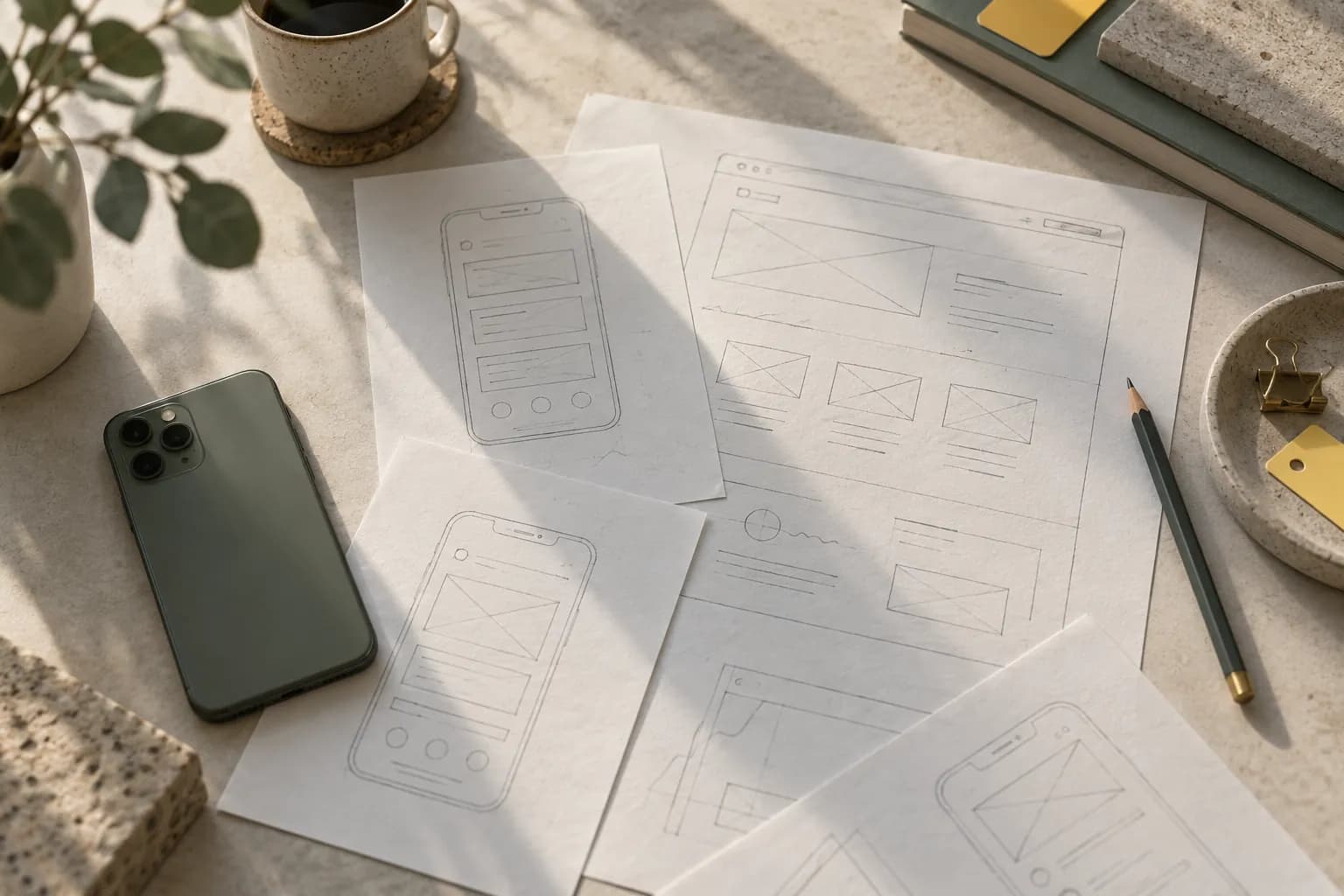
Websites & Digital Products
Business websites of up to eight pages, plus scoped web and mobile apps, handed over in your name.
AI Coaching
Two 90-minute sessions on your own tasks, ending with a tested prompt-and-check library.
Three hold points, in writing.
A hold point is a stage the work cannot pass until a named person on your side has checked it and signed it off. Each one produces a record you keep.
See the week-by-week plan


Walk the work
Sit with the people who do each task. List every AI tool already in use and what information goes into it, in an AI-use register.
Hold point: the owner confirms the registerScore and decide
Score each use on six criteria in the published worksheet. Write down a go, fix-first or stop decision, and the evidence behind it.
Hold point: each decision is signedTest before anyone relies on it
Agree acceptance criteria in writing, test on 20 to 50 of your own de-identified examples, and release it, or raise a non-conformance report.
Hold point: release or NCR
What an infrastructure inspector brings to AI
Full mapping to the Australian guidancetaliQ’s founder is a senior civil and structural engineer with more than five years of client-side QA inspection on government infrastructure. These are the tools of that job, applied to AI.
Inspection and test plan (ITP)
- Applied to AI
- Before an AI use is trialled, the checks are written down: what output is checked, what counts as acceptable, how many examples, and who decides.
- What you receive
- Pilot inspection and test plan
Hold point
- Applied to AI
- No AI use goes live, and no customer information goes into a tool, until the business’s accountable owner has signed it off against the test evidence.
- What you receive
- Hold-point release record
Witness point
- Applied to AI
- You are invited to watch the evaluation run on your own examples, so the result is not something you have to take on trust.
- What you receive
- Evaluation record
Evidence and records
- Applied to AI
- Every approved use, its tool and version, the test results and the release decision are kept in the AI-use register, so the decision can be checked by someone who wasn’t there.
- What you receive
- AI-use register
Non-conformance report (NCR)
- Applied to AI
- When an AI output is wrong in use (a wrong figure sent to a customer, or private information pasted into a public tool), it is logged, dealt with, traced to its cause and the prompt, data, rule or training is fixed.
- What you receive
- Non-conformance report
Client-side independence
- Applied to AI
- taliQ is engaged by you, not by a tool vendor, and will put a stop or fix-first decision in writing when that is the honest answer.
- What you receive
- Written go, fix-first or stop decisions
Inspect the work before you buy it
All samplesTemplate
Sample AI acceptable-use policy
A six-section policy for a small business, with each clause mapped to the Guidance for AI Adoption practices and the Voluntary AI Safety Standard guardrails. Free to adapt.
Worksheet
Use-case assessment worksheet
The one-page worksheet used in every assessment: six scored criteria, four hold points and the go, fix-first or stop rule.
Illustrative scenario
Worked scenario: AI-drafted quotes for a trade business
An illustrative, invented business taken through the worksheet, a pilot inspection and test plan and one non-conformance report.
Interactive tool
AI use-case scorer
Answer six questions about one task and get a go, fix-first or stop decision with the hold points that apply. Nothing you enter leaves your browser.
Not sure which offer fits?
The discovery call is free and takes 30 minutes. You leave with a recommendation of which offer fits, or a plain statement that none does.